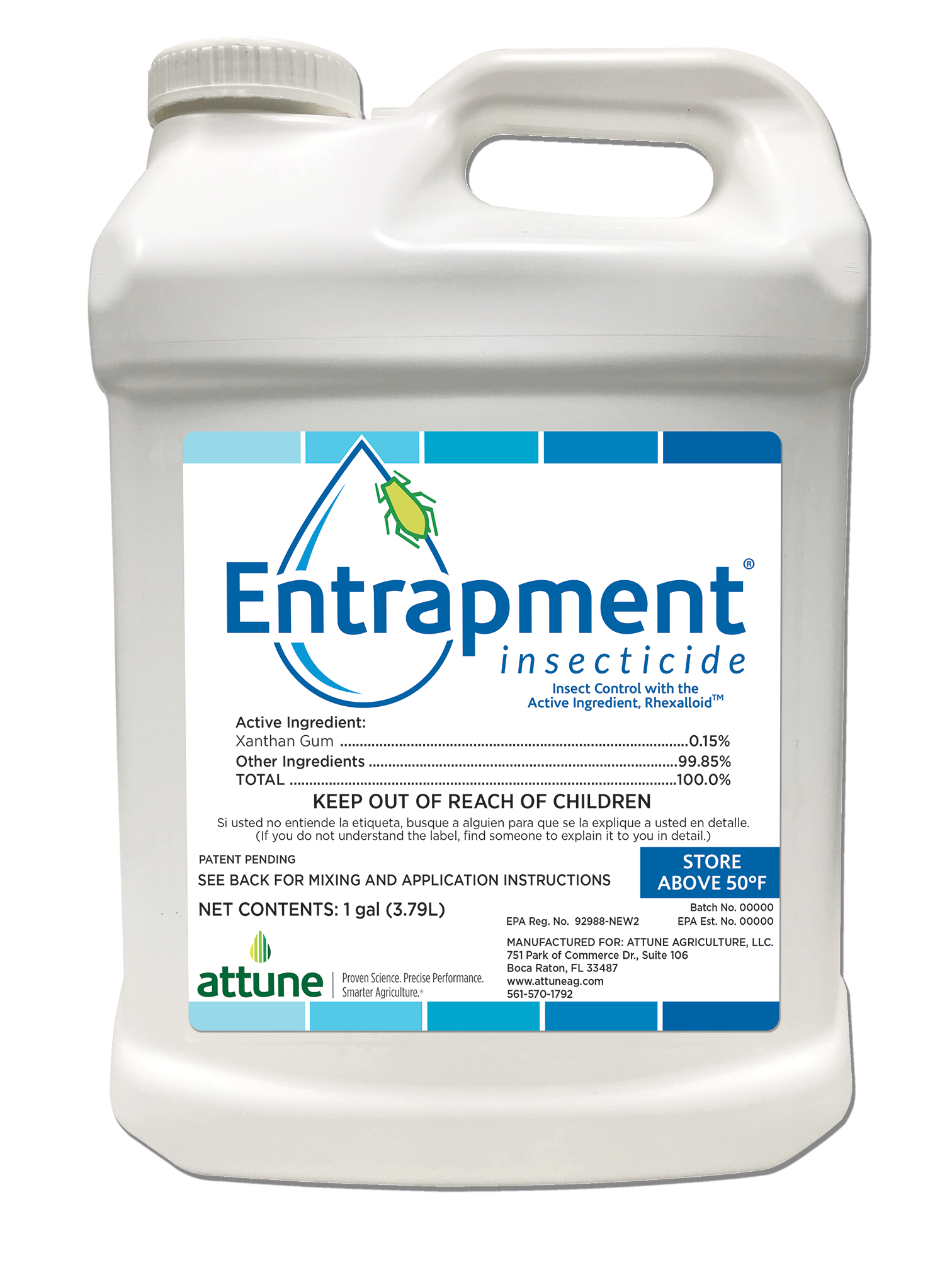
Entrapment
Insecticide with Physical Mode of Action: Engulf Trap Immobilize
A true disruptive technology for managing insect pests
Entrapment® is a non-systemic, contact insecticide that utilizes a physical mode of action to control insect pests. Powered by Rhexalloid® technology, Entrapment harnesses the power of hydrocolloids to transform every water droplet in your tank mix into adhesive traps on the target for insect and mite pests with performance equal to, or greater than, conventional chemical insecticides.

Hundreds of traps on every leaf surface
Entrapment’s unique technology creates a complex molecular matrix within every spray droplet that physically controls pests upon contact.
- 1
Adhere
Spray droplets with Entrapment bead up and anchor to the leaf’s surface. Adhesive properties capture or coat insects upon contact.
- 2
Engulf
Very small sized insects and mites (< 1 mm; 1st & 2nd instar) are engulfed by the droplets and suffocated.
- 3
Trap
Slightly larger insects (1 – 3 mm; 3rd – 5th instar) are trapped by the droplets. Once an appendage or wing makes contact with a droplet, the insect is stuck to the droplet and unable to break free.
- 4
Immobilize
Insects large enough (3 – 4 mm) to overcome a droplet’s adhesion become coated with the drop’s contents. The coating on the pest picks up debris as it moves about the leaf surface. Once the coating dries, the insect becomes immobilized.
)
Product benefits
The future of pest control is here. Manage yield-robbing insects and mites without the downsides that come with traditional chemical insecticides, while maintaining the performance level of conventional standards.
Broadly registered by EPA for use on most fruit, nut, vegetable, and row crops.
Unique spectrum of activity, providing effective control of aphids, thrips, psyllids, whiteflies, scales, leafhoppers, mites and certain plant bugs, chinch bugs and small caterpillars.
Exempt from tolerances, with 0 Day PHI and 4 hour REI.
No phytotoxicity
Can be tank mixed with a broad range of insecticides, fungicides, PGRs and foliar fertilizers.
Low potential for resistance development, valuable tool in all insect resistance management (IRM) strategies.
Soft on most beneficials, compatible with a wide range of insect pest management (IPM) strategies.
4 precise formulations
EPA label registered under the new Endangered Species Act (ESA) guidelines
A novel insecticide engineered to combat resistance
What is the pesticide treadmill, and how does it impact your spray program? Dr. Ed Quattlebaum, PhD, Director of Product Development at Attune Agriculture, outlines the framework and the actions within our control to manage this modern-day dilemma.


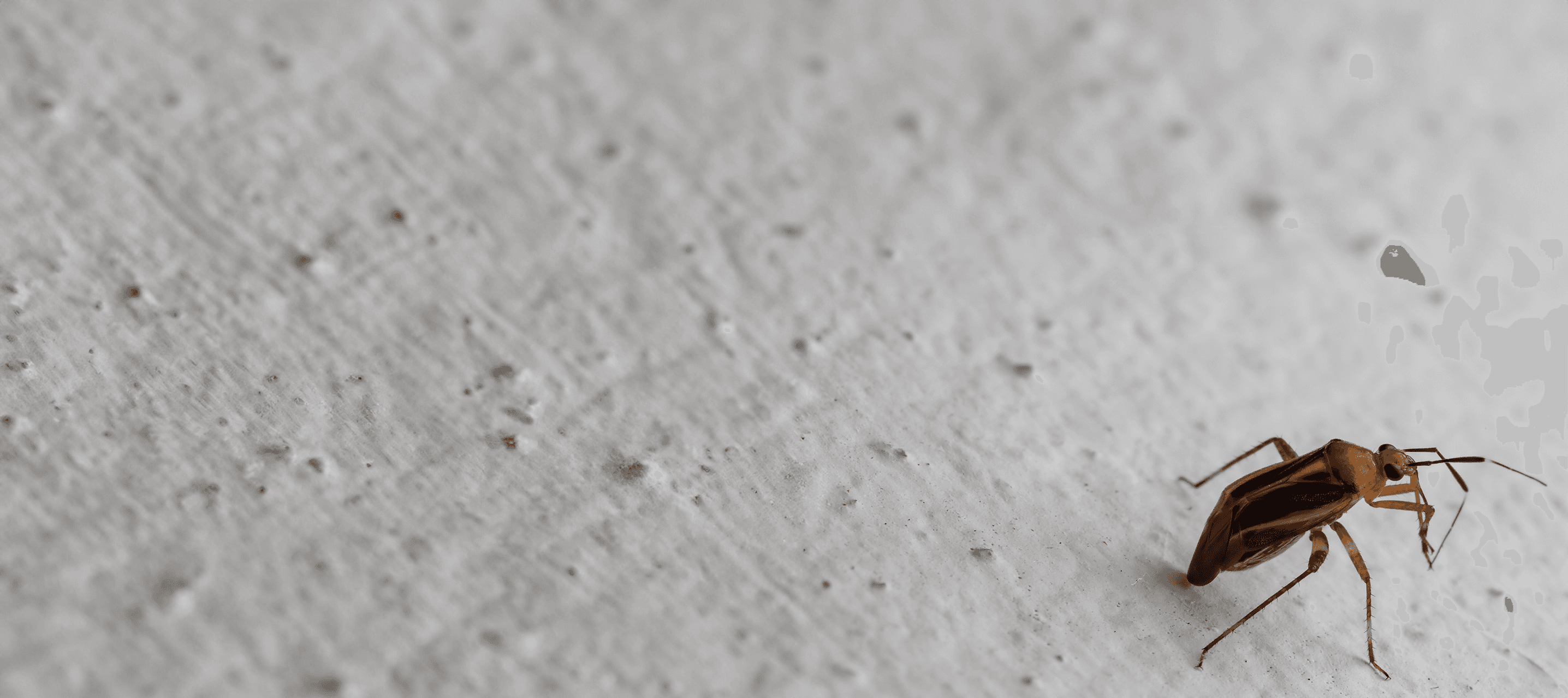
Entrapment® performs just as well as Transform® while being quite a bit cheaper. We plan on using Entrapment as a new mode of action next year in our battle against plant bugs.Felton Family FarmsMarianna, AR
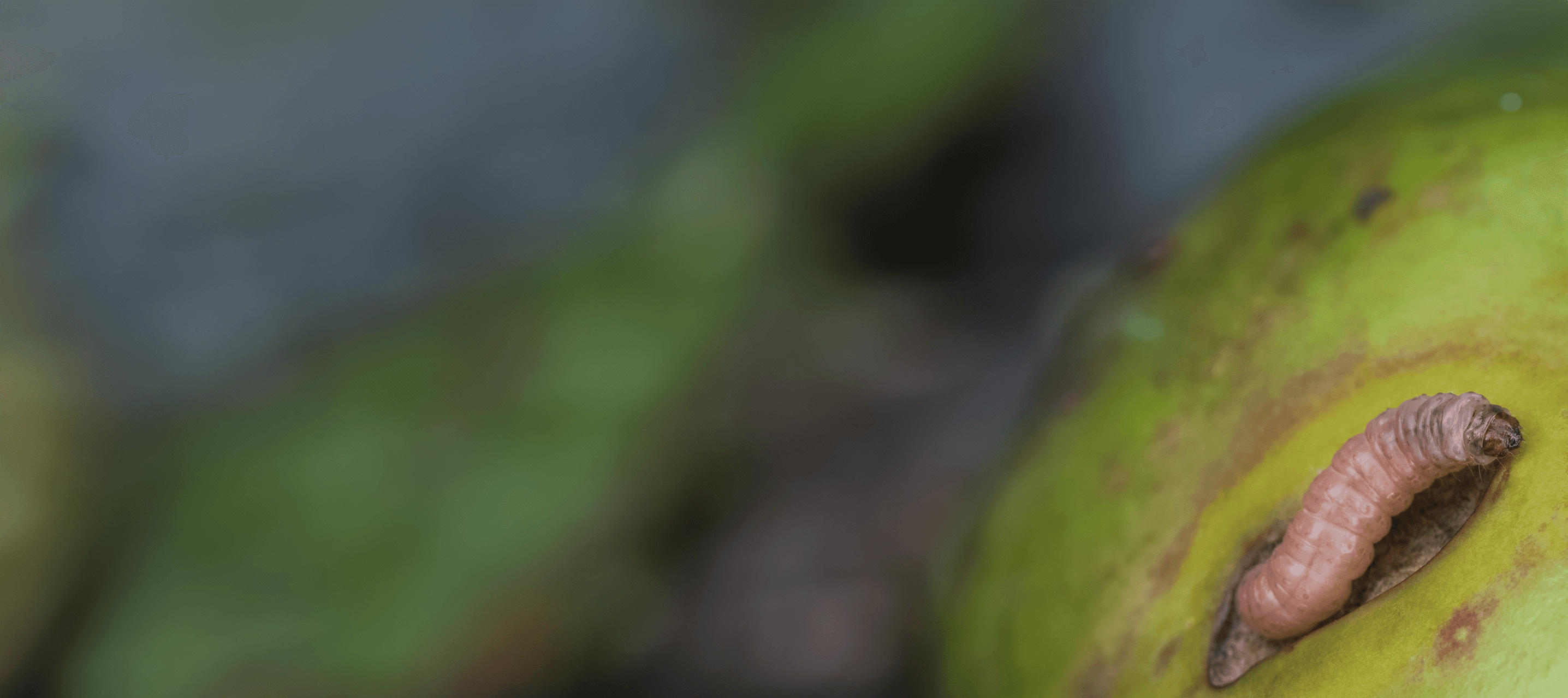
Entrapment® CK applied alone has statistically the same control for codling moth as compared to a standard insecticide program.Ag Development GroupEltopia, WA
Proof of performance
Entrapment’s performance has been validated by extensive testing from leading research facilities across the U.S.
A precise formulation for every application
Each formulation of Entrapment is optimized for the specific needs of its intended crop or pest. Control insects and mites with Entrapment as a stand-alone product, or in rotation with your favorite chemical products to decrease the likelihood of developing pesticide resistance.
)
Entrapment FV
Entrapment’s “Fruit and Vegetable” formulation is optimized for the specific needs of high value crops such as fruits, vegetables, and nuts.
)
Entrapment RC
Entrapment’s “Row Crop” formulation targets pests on large acreage row crops using low spray volumes such as wheat, cotton, and sorghum.
)
Entrapment SP
Entrapment’s “Specialty” formulation is OMRI listed for the specific needs of organic crops, greenhouses, turf and ornamentals, and golf courses.
)
Entrapment CK
Entrapment’s “Caterpillar Killer” formulation targets hard to kill pests such as navel orangeworm and codling moth, as well as whiteflies and mites.

Details & Labels
)